"When the hamster's tumour starts to bleed, bring her to me and I will put her to sleep, Vet 1 advised us," the mother brought her teenaged daughter and her hamster to me today 11.30 am, Friday Oct 7, 2011. "I consulted Vet 3 days ago and my daughter has been crying since."
Vet 1 had said that the dwarf hamster, being 2 years old, would die under anaesthesia and surgery. Therefore, wait till her abdominal tumour bleeds, to bring the hamster in to be euthanased. The mother could have surfed the internet and phoned me.
"It is not a guarantee that all dwarf hamsters with tumours will die under general anaesthesia," I don't understand why Vet 1 would not have asked the owner to see other vets if Vet 1 would not perform surgery. I just rejected a koi owner who phoned up to ask if I treat kois. It is the right thing to doand is in the interest of the animal. Not to advise waiting till the tumour bleeds and bring the hamster down for euthanasia.
"Much depends on the health of the hamster, the size of the tumour and the duration of anaesthesia," I happened to pick up the phone today as I was in the Surgery to interview a job applicant and teach 3 Temasek Polytechnic volunteers on cases involving an old Maltese with cystitis, a stray cat with FIV and a puppy on an IV drip, amongst other pets.
"How big is the tumour and is it a breast tumour?" I asked. The mum did not know and spoke to the daughter. "It is best I examine the hamster."
"How much is the consultation fee?"
"$30.00," I said. "But you already had consulted Vet 1. The decision should be whether you would want to take the risk of this old hamster being operated and pay the operation and anaesthetic fee.
"If the hamster survives the operation, she lives another 6 months as dwarf hamsters live up to 2.5 years of age. If she is not operated, the tumour gets infected and bleeds as the hamster keeps nibbling it. Lots of blood stains and great distress for your daughter in the next few days, leading ultimately to death by lethal injection. In such cases, your daughter would be much traumatised after seeing the hamster suffer from bleeding all day long!"
It is extremely difficult to be a mother of young teenagers nowadays. I could see that the slim fair 14-year-old was from an elite school. The cream of the crop, now much distracted by her hamster's poor health. She did not know when the tumour developed and so whether it was fast-growing or not, it was difficult to say .
"My daughter has her examinations till Monday," the mother said. I could sympathise with her as she wanted her daughter to excel in the highly competitive academic environment. How could she revise her lessons when she cried daily as her beloved hamster had no hope of survival?
As a veterinarian, the best interest of the pet must be priority. If the vet cannot handle a case, refer to other vets or ask the owner to find another vet. I don't treat birds and fishes and I don't accept such pets in the first place.
The dwarf hamster is old at 2 years of age, but she is full of energy. Weighed 36 gram and has an excellent appetite. Trying to escape when the cage door is lifted up.
"The chances of surviving anaesthesia are 70%," I said to the mother who had asked if I provided services to euthanase the hamster to prevent pain and suffering.
"Did you hear that?" the mum asked the quiet girl.
"Quite a good chance of survival," I said.
"You had operated on hamster tumours?" she asked.
"Yes," I said.
The 3 Temasek Poly students, Dr Vanessa, Mr Min and I attended to the dwarf hamster. "This is a case where Zoletil sedation is needed as isoflurane + oxygen gas will not give you sufficient time to excise and stitch up in less than 5 minutes."
I said to Dr Vanessa, "With Zoletil sedation, you have around 5 minutes of surgical anaesthesia to complete the surgery. But you can top up with isoflurane gas." I told Mr Min to switch on the gas, just in case.
"All the theories of dosage per kg in vet books are not applicable usually in the real practice," I said to the 3 students - a young man and two young ladies. "This dwarf hamster weighs 36 g. How many ml of Zoletil to give without killing her? This is why many vets all over the world do not like to anaesthesize hamsters. The safety range is very narrow."
I got the Zoletil ready. Two one-ml syringe was placed on the table. Mr Min got me a 23G needle which I told him was inappropriate. Dr Vanessa got the 25G needle.
A person learns by doing and making mistakes. No other way. I asked Dr Vanessa to get 2 drops of Zoletil from the first syringe of Zoeltil held by Mr Min. She got 2 drops. This would not even fill up 0.01 ml of the syringe. "Add normal saline 0.05 ml," I said. "Just a little bit."
She did it. Overall, the amount was less than 0.05 ml.
The students watched in silence as Dr Vanessa adjusted the drug inside the syringe. She pushed up the plunger up a bit. Suddenly a spray of anaesthetic shot out from the needle as she had not contained all at one lower end, if you know what I am talking about.
The students kept silent. Nobody dared to laugh as I am the serious type when it comes to training. I guessed the students were astonished.
"We have to start all over again," I said to Dr Vanessa. "Use a new syringe." This time I adjusted the drug content inside the syringe and then asked Dr Vanessa to inject the hamster IM.
"Inject IM?," Dr Vanessa said I should do it. I understand. This dwarf hamster has no bulky backside muscles like the dog or cat or even a rabbit.
I stretched out the hamster's left hind leg while Min held the front body. I pointed the 25G needle at the appropriate backside and injected. I have a big bandaged right hand but I could still do the injection.
"If the hamster does not go groggy within 1 minute of injection," I said to the students, "It means the dosage was insufficient or that I had not injected directly into the muscle."
The students were very silent. Within 60 seconds, the dwarf hamster went down on her side. "You have less than 5 minutes to complete the excision of the tumour without isoflurane gas," I said to Dr Vanessa. Everything has been prepared for her.
I handed her the scalpel. She knicked the tumour for 0.8 mm long, undermined, clamped and used the scalpel to excise off the lump. The hamster moved a bit as the anaesthesia was lighter.
It is extremely difficult to get the ideal dosage without causing death as the hamster is so small," I said to one student who later commented that the hamster had moved during the stitching up. "This high anaesthetic risk is the reason why many vets do not want to do surgery to remove big tumours."
The 3 students had a rare opportunity to see the whole process from pre-op to post-op
--------------------------------------------------------------------
Above took 57 minutes to create. National Library Victoria Street, 5.12 pm, Oct 7, 2011
Something wrong with the computer. The text automatically became so small as to be unreadable. So, had to stop writing.
Friday, October 7, 2011

661. Teaching 2 Temasek Polytechnic students how to write a script
"The usual scientific report and writing as taught in the schools will put the audience to sleep," I referred to a report on "urinary tract infection in an old dog" written by a student volunteering at Toa Payoh Vets. He started "An 8-year-old Maltese was brought by his owner to see the vet .........."
The following are my points for producing a more interesting video.
1. The hook

2. Introduction

3. Middle (5 important messages or points). One point is as follows:

Bacterial infection of the joints follow if you don't have time to get your vet to treat your hamster early.
The thick yellow pus forms. The skin infections spreads all over the hamster's body. The hamster stops eating. Dies of generalised bacterial infections
4. Conclusion

5. Credits
toapayohvets.com
Be Kind To Pets
Veterinary Education
Project 2010-0129
More info and details are at:
http://www.sinpets.com/F6/20111004Four-itchy-joints-dwarf-hamster-singapore_ToaPayohVets.htm
The following are my points for producing a more interesting video.
1. The hook
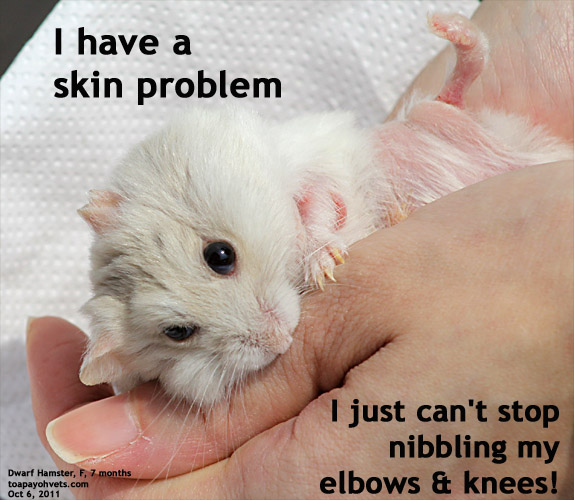
2. Introduction
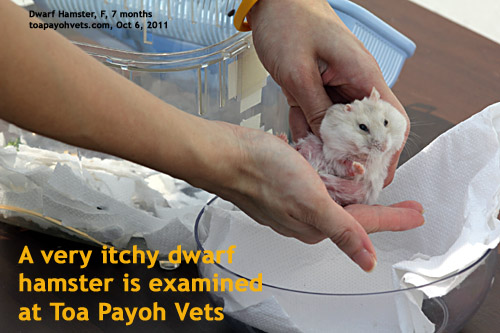
3. Middle (5 important messages or points). One point is as follows:
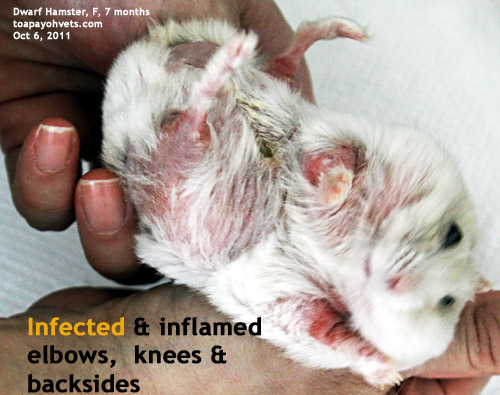
Bacterial infection of the joints follow if you don't have time to get your vet to treat your hamster early.
The thick yellow pus forms. The skin infections spreads all over the hamster's body. The hamster stops eating. Dies of generalised bacterial infections
4. Conclusion
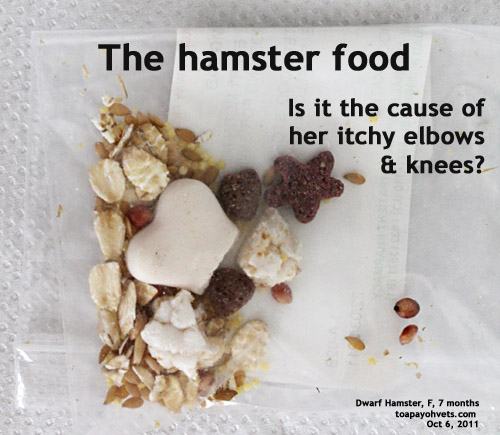
5. Credits
toapayohvets.com
Be Kind To Pets
Veterinary Education
Project 2010-0129
More info and details are at:
http://www.sinpets.com/F6/20111004Four-itchy-joints-dwarf-hamster-singapore_ToaPayohVets.htm
Thursday, October 6, 2011
Toilet training advices by email can be incorrect without puppy housing pics
Chua to judy
show details Sep 23 (13 days ago)
Hi Judy,
I read this article http://www.toapayohvets.com/sinpets/050620play_pen_toilet_training.htm and find it very useful. I am currently actively looking for a family pet and would be very thankful if you could help to answer my following query.
I am interested to use the crate + pee pan method or play pen + pee pan method. With one of these method, does it mean that they are trained to pee/poo inside the crate/play pen and I do not have to bring him/her out to pee/poo? How about at night? Do I still have to wake up and bring it to pee/poo or should I leave him/her in the crate/play pen? Your kind advise would be greatly appreciated.
Rgds,
K. K. Chua
show details Sep 24 (12 days ago)
I am Dr Sing from Toa Payoh Vets, http://www.toapayohvets.com.
Thank you for your email.
1. The objective of the two methods you mention in your email below is to confine the puppy for 2-4 weeks so that they will pee and poop within that confined area. However, the owner must clean up the soiled area immediately after the puppy has had eliminated. The puppy is naturally a clean animal and if the owner does not remove the stools or wash the soiled area, the chances of early sucess (ie. within 4 weeks) are slim.
1.1 Therefore, you do not have to bring the puppy out to pee and poop using the above methods. However, after midnight, in some situations where there is no distraction from many family members, (e.g. a couple living alone), some new puppies do make a lot of noise asking the owner to change/wash the soiled area. Owners who sleep near the puppies will do it. But most owners don't know and think that the puppy needs company.
2. If you wish to take the puppy out to pee and poop, you can do it but do it as a routine (i.e. at certain times e.g. after each meal) but you sabotage your objective as stated in Para 1. You just need to be consistent in your routine in toilet training.
I hope the above answers your questions.
Chua to me
show details Sep 24 (12 days ago)
Hi,
Thanks alot for the advice. One more question if you do not mind. After 4 weeks, do I still let the puppy pee and poop inside or do I have to switch training method to let the puppy pee and poop outside on a pee pan (without the cage). The intention is to eventually get rid of the cage so that the puppy can sleep in a cosy basket in my children's room, but will go back to the pee pan to pee and poop.
Rgds,
K. K. Chua
- Show quoted text -
show details Oct 5 (1 day ago)
Hi Dr Kong,
Would really appreciate your advice here. Thanks in advance.
Rgds,
K. K. Chua
Oct 6, 2011
I am Dr Sing from Toa Payoh Vets. Sorry, I missed reading your email as I have over a hundred junk mails a day. In reply, after 2-4 weeks, depending on your puppy's intelligence and your training methods and patience, expand the outer space (floor area by 100%. For example, you fence off a floor area 100% of the floor area of the cage. The puppy comes out to this area to eat and drink and jumps back to the cage (or pee pan) to pee and poop (in theory!) and sleep. do this for another 2 weeks or less. Once the puppy has the routine, you can expand the space to a room e.g. kitchen or balcony. Gradually increase the space till the puppy knows what to do.
I hope you understand what I am talking about. If not, let me know.
As I don't have pictures of what is the exact housing of this puppy, it is extremely difficult to know how to advise you. You may wish to email 3 pictures of how the puppy is housed and where it pees and poops. Otherwise you say one thing and I imagine and advise on another incorrectly. That is the problem with email advices on toilet training in puppies.
Thanks alot for the advice. One more question if you do not mind. After 4 weeks, do I still let the puppy pee and poop inside or do I have to switch training method to let the puppy pee and poop outside on a pee pan (without the cage). The intention is to eventually get rid of the cage so that the puppy can sleep in a cosy basket in my children's room, but will go back to the pee pan to pee and poop.
Rgds,
K. K. Chua
- Show quoted text -
show details Sep 23 (13 days ago)
Hi Judy,
I read this article http://www.toapayohvets.com/sinpets/050620play_pen_toilet_training.htm and find it very useful. I am currently actively looking for a family pet and would be very thankful if you could help to answer my following query.
I am interested to use the crate + pee pan method or play pen + pee pan method. With one of these method, does it mean that they are trained to pee/poo inside the crate/play pen and I do not have to bring him/her out to pee/poo? How about at night? Do I still have to wake up and bring it to pee/poo or should I leave him/her in the crate/play pen? Your kind advise would be greatly appreciated.
Rgds,
K. K. Chua
show details Sep 24 (12 days ago)
I am Dr Sing from Toa Payoh Vets, http://www.toapayohvets.com.
Thank you for your email.
1. The objective of the two methods you mention in your email below is to confine the puppy for 2-4 weeks so that they will pee and poop within that confined area. However, the owner must clean up the soiled area immediately after the puppy has had eliminated. The puppy is naturally a clean animal and if the owner does not remove the stools or wash the soiled area, the chances of early sucess (ie. within 4 weeks) are slim.
1.1 Therefore, you do not have to bring the puppy out to pee and poop using the above methods. However, after midnight, in some situations where there is no distraction from many family members, (e.g. a couple living alone), some new puppies do make a lot of noise asking the owner to change/wash the soiled area. Owners who sleep near the puppies will do it. But most owners don't know and think that the puppy needs company.
2. If you wish to take the puppy out to pee and poop, you can do it but do it as a routine (i.e. at certain times e.g. after each meal) but you sabotage your objective as stated in Para 1. You just need to be consistent in your routine in toilet training.
I hope the above answers your questions.
Chua to me
show details Sep 24 (12 days ago)
Hi,
Thanks alot for the advice. One more question if you do not mind. After 4 weeks, do I still let the puppy pee and poop inside or do I have to switch training method to let the puppy pee and poop outside on a pee pan (without the cage). The intention is to eventually get rid of the cage so that the puppy can sleep in a cosy basket in my children's room, but will go back to the pee pan to pee and poop.
Rgds,
K. K. Chua
- Show quoted text -
show details Oct 5 (1 day ago)
Hi Dr Kong,
Would really appreciate your advice here. Thanks in advance.
Rgds,
K. K. Chua
Oct 6, 2011
I am Dr Sing from Toa Payoh Vets. Sorry, I missed reading your email as I have over a hundred junk mails a day. In reply, after 2-4 weeks, depending on your puppy's intelligence and your training methods and patience, expand the outer space (floor area by 100%. For example, you fence off a floor area 100% of the floor area of the cage. The puppy comes out to this area to eat and drink and jumps back to the cage (or pee pan) to pee and poop (in theory!) and sleep. do this for another 2 weeks or less. Once the puppy has the routine, you can expand the space to a room e.g. kitchen or balcony. Gradually increase the space till the puppy knows what to do.
I hope you understand what I am talking about. If not, let me know.
As I don't have pictures of what is the exact housing of this puppy, it is extremely difficult to know how to advise you. You may wish to email 3 pictures of how the puppy is housed and where it pees and poops. Otherwise you say one thing and I imagine and advise on another incorrectly. That is the problem with email advices on toilet training in puppies.
Thanks alot for the advice. One more question if you do not mind. After 4 weeks, do I still let the puppy pee and poop inside or do I have to switch training method to let the puppy pee and poop outside on a pee pan (without the cage). The intention is to eventually get rid of the cage so that the puppy can sleep in a cosy basket in my children's room, but will go back to the pee pan to pee and poop.
Rgds,
K. K. Chua
- Show quoted text -

FIV in a stray cat - the interest of the stray cat is to get him eating and not sneezing
FIV in a stray cat - the interest of the stray cat is to get him eating and not sneezing
A mother with two young daughters found an adult stray cat. "Had runny nose and cough for the past 2 months," she said to me. "The cat follows us home. Must have been kept as a pet before. Just goes to the bathroom herself. Very gentle. I adopted her. But she can't eat now."
Dr Vanessa and I examined the cat. Deep yellow runny nose, saliva drooling from her mouth and her front legs were slimy by a thick crust of purplish red stains.
"How do you know this is a stray cat?" the mother asked.
"The left ear tip is clipped," I said. "There are kind people who gets stray cat sterilised by the vet. The vet cuts a piece of the left ear off to show the law enforcement AVA officers that the cat had been sterilised and is a stray. Hopefully, this cat does not get netted and taken away."
"I had intended to get a cat from the SPCA," she said. "But they charge for adoption."
"Well, you can adopt some from the road," I replied but actually, stray cats are quite uncommon nowadays, in coffee shops unlike 10 years ago. They are an endangered species.
I opened the mouth of the cat. Periodontal diseases with gum ulcers and loose teeth. That means painful mouth and so he can't eat properly. It is best to get the ulcers treated and then the bad teeth extracted."
This would be the most economical cost for a stray cat.
"Stray cats have FIV," Dr Vanessa said. "You should test for FIV."
"What is FIV?" the mother asked.
"Cat AIDS," Dr Vanessa said.
"AIDS, like AIDS in people?"
"FIV is cat AIDS"
"Will my children get AIDS from the cat then?" the mother was worried she would also get AIDS.
"No, no, cat AIDS don't infect people. However, the infected cat's life is short."
"How much to test for AIDS?" the mother asked.
"$85.00"
The mother hesitated. This money would be better spent on treatment as stray cat owners seldom want to pay much.
"It is better to get the infection of the nose and the mouth treated," I advised the owner and proposed a package of treatment and hospitalisation excluding FIV test.
Later I spoke to Dr Vanessa to think from the point of view and economics of heartland practice of stray cats in Toa Payoh area.
I asked her: "Assume I am the stray cat owner. Can you tell me that there a cure when I spend $85.00 and you diagnose that my stray cat has feline FIV?"
"No," she said.
"Therefore, in real world, it is in the best interest of the cat with or without FIV to get treated for her URTI (Upper Respiratory Tract Infection) - yellow nasal discharge and sneezing for the past 2 months with antibiotics and cleaned up her mouth. The cat will be able to eat and if not stressed out (by being a stray cat but housed and cared for, the cat will thrive. FIV does not need to be a terrible death for a cat that is well cared for. In other words, limited money for the average heartlander is better spent on treatment rather than on blood test."
Dr Vanessa nodded her head. The owner hospitalised the cat for the next 7 days. Later she phoned to say she wanted FIV test. Today, 2 days after antibiotic treatment, I asked Mr Min whether the cat had improved in health. Mr Min was non-commital. "Dr Vanessa tested the cat FIV positive," he said.
"Just see her nose," I said. "Any yellow discharge? Is the cat looking better? Has he got good appetite?"
The cat had clear clean nostrils and he looked bright-eyed and alert. His front paws had less dark brown sticky stains as when he came in. Those stains were caused by his continuous and excessive salivation and his runny nose stuck onto the front forelimbs when he failed to groom properly.
"Did you clean his noses?" I asked Mr Min.
"No," he mumbled. He just gave antibiotics as instructed by me. A normal cat always clean himself but definitely, the antibiotics had worked for him.
So Mr Min could see that there is an improvement if he is observant. The cat had no fever at admission. Despite having been tested for FIV positive, he had shown health improvement. A few days later, I will get his dental work done. So, he has a fair chance of leading a normal life if well cared for.
I need a lot of patience to mentor Mr Min as he is new to small animal medicine and surgery. Overall, I respect him as a veterinarian graduated from Myanmar and working in Singapore enables him to see the varied cases of dogs, cats and small animals that he has no opportunity to see in Yangon which does not have that large number of pet lovers as in Singapore in 2011. But I predict Yangon's small animal veterinary medicine and surgery should be expanding in 5 years' time as Yangon is growing fast and prospering.
In heartland practice of stray cat, the financial considerations are very important and expensive FIV tests take up the budget. So, in the best interest of the cat, I prefer to get him treated for his bacterial infections and periodontal diseases first rather than confirming the diagnosis of FIV. Of course, in an upscale practice, FIV is routinely done without a thought as the owners don't worry about a cent, in general.
A mother with two young daughters found an adult stray cat. "Had runny nose and cough for the past 2 months," she said to me. "The cat follows us home. Must have been kept as a pet before. Just goes to the bathroom herself. Very gentle. I adopted her. But she can't eat now."
Dr Vanessa and I examined the cat. Deep yellow runny nose, saliva drooling from her mouth and her front legs were slimy by a thick crust of purplish red stains.
"How do you know this is a stray cat?" the mother asked.
"The left ear tip is clipped," I said. "There are kind people who gets stray cat sterilised by the vet. The vet cuts a piece of the left ear off to show the law enforcement AVA officers that the cat had been sterilised and is a stray. Hopefully, this cat does not get netted and taken away."
"I had intended to get a cat from the SPCA," she said. "But they charge for adoption."
"Well, you can adopt some from the road," I replied but actually, stray cats are quite uncommon nowadays, in coffee shops unlike 10 years ago. They are an endangered species.
I opened the mouth of the cat. Periodontal diseases with gum ulcers and loose teeth. That means painful mouth and so he can't eat properly. It is best to get the ulcers treated and then the bad teeth extracted."
This would be the most economical cost for a stray cat.
"Stray cats have FIV," Dr Vanessa said. "You should test for FIV."
"What is FIV?" the mother asked.
"Cat AIDS," Dr Vanessa said.
"AIDS, like AIDS in people?"
"FIV is cat AIDS"
"Will my children get AIDS from the cat then?" the mother was worried she would also get AIDS.
"No, no, cat AIDS don't infect people. However, the infected cat's life is short."
"How much to test for AIDS?" the mother asked.
"$85.00"
The mother hesitated. This money would be better spent on treatment as stray cat owners seldom want to pay much.
"It is better to get the infection of the nose and the mouth treated," I advised the owner and proposed a package of treatment and hospitalisation excluding FIV test.
Later I spoke to Dr Vanessa to think from the point of view and economics of heartland practice of stray cats in Toa Payoh area.
I asked her: "Assume I am the stray cat owner. Can you tell me that there a cure when I spend $85.00 and you diagnose that my stray cat has feline FIV?"
"No," she said.
"Therefore, in real world, it is in the best interest of the cat with or without FIV to get treated for her URTI (Upper Respiratory Tract Infection) - yellow nasal discharge and sneezing for the past 2 months with antibiotics and cleaned up her mouth. The cat will be able to eat and if not stressed out (by being a stray cat but housed and cared for, the cat will thrive. FIV does not need to be a terrible death for a cat that is well cared for. In other words, limited money for the average heartlander is better spent on treatment rather than on blood test."
Dr Vanessa nodded her head. The owner hospitalised the cat for the next 7 days. Later she phoned to say she wanted FIV test. Today, 2 days after antibiotic treatment, I asked Mr Min whether the cat had improved in health. Mr Min was non-commital. "Dr Vanessa tested the cat FIV positive," he said.
"Just see her nose," I said. "Any yellow discharge? Is the cat looking better? Has he got good appetite?"
The cat had clear clean nostrils and he looked bright-eyed and alert. His front paws had less dark brown sticky stains as when he came in. Those stains were caused by his continuous and excessive salivation and his runny nose stuck onto the front forelimbs when he failed to groom properly.
"Did you clean his noses?" I asked Mr Min.
"No," he mumbled. He just gave antibiotics as instructed by me. A normal cat always clean himself but definitely, the antibiotics had worked for him.
So Mr Min could see that there is an improvement if he is observant. The cat had no fever at admission. Despite having been tested for FIV positive, he had shown health improvement. A few days later, I will get his dental work done. So, he has a fair chance of leading a normal life if well cared for.
I need a lot of patience to mentor Mr Min as he is new to small animal medicine and surgery. Overall, I respect him as a veterinarian graduated from Myanmar and working in Singapore enables him to see the varied cases of dogs, cats and small animals that he has no opportunity to see in Yangon which does not have that large number of pet lovers as in Singapore in 2011. But I predict Yangon's small animal veterinary medicine and surgery should be expanding in 5 years' time as Yangon is growing fast and prospering.
In heartland practice of stray cat, the financial considerations are very important and expensive FIV tests take up the budget. So, in the best interest of the cat, I prefer to get him treated for his bacterial infections and periodontal diseases first rather than confirming the diagnosis of FIV. Of course, in an upscale practice, FIV is routinely done without a thought as the owners don't worry about a cent, in general.
AVA Responsible Pet Ownership Roadshow 2011 - Nov 12 and 13 - seminar talks
Singapore EXPO and Convention Centre
Theme "A Pet Is For Life"
Dr Sing's tentative timing for Pet Care Workshop talks at:
20-30 min, seminar room, max 25 people
Sat Nov 12 1.30 pm - 2pm Some common diseases in Singapore dogs - cases seen at Toa Payoh Vets
Sun Nov 13 3.30pm - 4pm Tumours and warts in Singapore hamsters - cases seen at Toa Payoh Vets
Vets to
Share knowledge and educate the public on basic animal care & husbandry
Common conditions that can result in pet abandonment such as chronic illness, skin conditions or behavioural issues and how owners can manage these conditions well
Theme "A Pet Is For Life"
Dr Sing's tentative timing for Pet Care Workshop talks at:
20-30 min, seminar room, max 25 people
Sat Nov 12 1.30 pm - 2pm Some common diseases in Singapore dogs - cases seen at Toa Payoh Vets
Sun Nov 13 3.30pm - 4pm Tumours and warts in Singapore hamsters - cases seen at Toa Payoh Vets
Vets to
Share knowledge and educate the public on basic animal care & husbandry
Common conditions that can result in pet abandonment such as chronic illness, skin conditions or behavioural issues and how owners can manage these conditions well
656. Toilet training a toy poodle - wife upset
656. Toilet training a toy poodle - wife upset
E-MAIL TO DR SING DATED OCT 6, 2011
Hi Judy,
I got a toy poodle puppy about 10 days ago. And it has been peeing and pooping everywhere since day 1.
I keep him in a nice-looking cage which cost me $150, but without a pee pan. So I bought a toilet about 1/4 of the size of the cage and put it inside.
However, he only peed there twice, which I assume is random. I immediately praised him and gave him sneaks after the two times, but then he still messes around.
I tried putting a paper with his urine in the toilet, which doesn't work.
I also tried using the so-called spray to seduce dogs to pee, but he never reacted to it.
Then my wife became impatient and started to beat him. Now my poodle is very scared and confused, he does not know where to toilet, but cannot hold. So after he pees, he will wipe it with his paws.
It is even more messed up when he is inside the cage. Every time when nobody is around, he will make the urine everywhere inside the cage, except for the toilet I bought for him.
I completely don't know how to deal with him. Please help!!!
Thank you!
Best regards,
Name given
E-MAIL FROM DR SING DATED OCT 6, 2011
I am Dr Sing from Toa Payoh Vets. My general advice is:
1. Get a dog trainer to paper train your dog as it takes some 2-4 weeks of patience, positive reinforcement and confinement to train your puppy if your wife is upset with the need to clean up after the puppy.
Contact me at Toa Payoh Vets to discuss further as a book can be written just on how to toilet train a new puppy in the Singapore apartment based on different types of housing, history of the puppy, intelligence of the puppy and the personality of the puppy owner, spouses and family members.
2. The puppy would likely be from a pet shop. If this is correct, your new "toilet" area is so much different from what he is used to. So, he gets confused. Shouting and beating really frightens him at this young age. He may be used to grated floor and pee pan below if he has been sold at the pet shop or breeder as this is the most common type of housing. Sometimes, duplicating what the puppy is used to, will have made life easier for the puppy and your wife.
3. In your situation where one family member (wife or mother usually as they have to clean up the urine and stools and bathe the puppy to keep the apartment much less smelly) is upset over the toilet mess and where the owner (buyer) does not want to give away the puppy, based on my experience with 600 cases of puppy training situations in my research, your better solution will be to get a puppy trainer to do the toilet training. Pl make an appointment to see me if possible as email diagnosis and advices are not as good as one-to-one discussion and analysis of the real situation which takes much more time than writing a reply to you.
E-MAIL TO DR SING DATED OCT 6, 2011
Hi Judy,
I got a toy poodle puppy about 10 days ago. And it has been peeing and pooping everywhere since day 1.
I keep him in a nice-looking cage which cost me $150, but without a pee pan. So I bought a toilet about 1/4 of the size of the cage and put it inside.
However, he only peed there twice, which I assume is random. I immediately praised him and gave him sneaks after the two times, but then he still messes around.
I tried putting a paper with his urine in the toilet, which doesn't work.
I also tried using the so-called spray to seduce dogs to pee, but he never reacted to it.
Then my wife became impatient and started to beat him. Now my poodle is very scared and confused, he does not know where to toilet, but cannot hold. So after he pees, he will wipe it with his paws.
It is even more messed up when he is inside the cage. Every time when nobody is around, he will make the urine everywhere inside the cage, except for the toilet I bought for him.
I completely don't know how to deal with him. Please help!!!
Thank you!
Best regards,
Name given
E-MAIL FROM DR SING DATED OCT 6, 2011
I am Dr Sing from Toa Payoh Vets. My general advice is:
1. Get a dog trainer to paper train your dog as it takes some 2-4 weeks of patience, positive reinforcement and confinement to train your puppy if your wife is upset with the need to clean up after the puppy.
Contact me at Toa Payoh Vets to discuss further as a book can be written just on how to toilet train a new puppy in the Singapore apartment based on different types of housing, history of the puppy, intelligence of the puppy and the personality of the puppy owner, spouses and family members.
2. The puppy would likely be from a pet shop. If this is correct, your new "toilet" area is so much different from what he is used to. So, he gets confused. Shouting and beating really frightens him at this young age. He may be used to grated floor and pee pan below if he has been sold at the pet shop or breeder as this is the most common type of housing. Sometimes, duplicating what the puppy is used to, will have made life easier for the puppy and your wife.
3. In your situation where one family member (wife or mother usually as they have to clean up the urine and stools and bathe the puppy to keep the apartment much less smelly) is upset over the toilet mess and where the owner (buyer) does not want to give away the puppy, based on my experience with 600 cases of puppy training situations in my research, your better solution will be to get a puppy trainer to do the toilet training. Pl make an appointment to see me if possible as email diagnosis and advices are not as good as one-to-one discussion and analysis of the real situation which takes much more time than writing a reply to you.
Wednesday, October 5, 2011
645. Sick terrapin
see
www.toapayohvets.com
On Tue, Oct 4, 2011 at 1:46 PM, ...@pacific.net.sg> wrote:
Kindly adv me what time is yr clinic open from every day.
Sent from Samsung Mobile
Kong Yuen Sing <99pups@gmail.com>
wrote:
>There are several causes. Pl bring the terrapin for an examination at Toa
>Payoh Vets as it is difficult to diagnose via the internet.
>
On Mon, Oct 3, 2011 at 10:41 PM, ...@pacific.net.sg>wrote:
>
>>
>> Dear Judy
>>
>> I got your email from the website.
>>
>> Lately my terrapin has no appetite to eat his food and this has been going
>> on for a few days. I am afraid something might happen to him.
>>
>> No ideal what is happening to him?
>>
>> Please advise ASAP.
>>
>> I can be reached at my hp ...
>>
>> Thank you.
>>
>>
>> Regards
>> xxx
>>
www.toapayohvets.com
On Tue, Oct 4, 2011 at 1:46 PM, ...@pacific.net.sg> wrote:
Kindly adv me what time is yr clinic open from every day.
Sent from Samsung Mobile
Kong Yuen Sing <99pups@gmail.com>
wrote:
>There are several causes. Pl bring the terrapin for an examination at Toa
>Payoh Vets as it is difficult to diagnose via the internet.
>
On Mon, Oct 3, 2011 at 10:41 PM, ...@pacific.net.sg>wrote:
>
>>
>> Dear Judy
>>
>> I got your email from the website.
>>
>> Lately my terrapin has no appetite to eat his food and this has been going
>> on for a few days. I am afraid something might happen to him.
>>
>> No ideal what is happening to him?
>>
>> Please advise ASAP.
>>
>> I can be reached at my hp ...
>>
>> Thank you.
>>
>>
>> Regards
>> xxx
>>
654. Best Practices from the SGH
can only type with left hand. on oct 4 2011 was operated by prof foo at sgh
admitted 7am
1. frontline asked me to scan my admission booklet barcode opposite near door and a machine will print q no. 1008. i scanned barcode on book cover. no response. she got up,open inside front cover. another barcode. got my slip paper no. 1008. good n0. not 1004 ("4" = death in chinese, ga death for me?)
2. TPR
young doc in blue v-top introduced himself, wrote lots on case sheet. had asked pre-op health qestions as what the anaesth doctor asked on sep 24. senior nurse took ear temp, doc machine pulse rate (50) bp 137/70, pr 50bpm
put finger on my l inner wrist - why when machine showed pr? i asked. pulse quality he said. well done
"where is the stethoscope?" the senior nurse fished it out from lower drawer. later i asked why hide it? they get lost she said. littmann brand over $100. i remembered mine (orange) at toa payoh vets being "lost" my assistant told me lately. not a trace. so sgh has similar problem too
"breathe in" doc placed scope on my back 3 spots, then front chest. he did not say breathe out as i held my breath. so when he reiterated, i was still holding my breath
drug allergy? medication? dentures? crown? no
"you must be exercising?" he asked. 61 year old, still working, bmi above normal must have some anti-cholesterol, high bp as is common. sgh does not screenor lipids on sep 24 blood test. chest x-ray ok
how come? the tired doc did not ask. his job was to check risk factors foe ga
senior nurse (SN) had to record on a form as she ask more questions. "Op theatre is chasing for you. i have to complete check list." very busy. one nurse does the job of 4 people. "why not ask union for help?" i asked. no use, she replied. SN carries more burden to teach procedures in all hospitals in medical n vet. they do get fed up but young doc need time to be familiar, like young vets.
"how much cash? handphone?"
$20, no phone"
Your change of clothes, blue first. green. gave me a bag which also had a paper panty
"did the doc mark arrow your thumb cyst?"
no
i will find him
a black arrow marker pen pointed to cyst
A younger nurse could not find slippers for me to change
the op was looking for me, it was nearly 8 am
"I'll go up to get the slippers," she wanted to go upstairs, pressed elevator, somebody called her away. the lift door closed. as soon as it opened, a covered bin inside was taken out.
when lift door opened again, i pressed button so she could do her job. i am a vet surgeon and dislike processes delaying start of any surgery. back-log. it gets tiring for the surgeon waiting for prep of patient as i am not the only one
nurse smiled n asked me not to hold lift open. she gave me slippers, might be inside the bin. a shower cap too.
lift with nurse upstairs to a big room with many beds. in another small room, i was on a trolley bed and saw more nurses. a young doctor introduced herself as anaesthetist. "You don't look like the anae who spoke to me" i said.
In her 30s' with sufficient years of maturity of experience and inspiring confidence in me. She had big black happy eyes, fair face and as you know, eyes to me, are windows to the soul. and her eyes were sunshine on a day i know i would unlikely to meet my maker (not die on the op table, this being my 4th ga). no doc can guarantee no heart failure, thrombotic shock into brain, drug reaction
"what u use for anae? propofol?"
Propofol is in the news as having killed michael jackson
"propofol, fetamine and ketamine"
Prof Foo in blue top n green shower cap came, tanned face and a personality that some doc naturally possess (as evident when I spoke to his nurses at various consultation times, greeted me and said in his best happy voice"take good care of my friend."
i asked for a mole on the right palm to be excised. it grew slowly bigger as i age over the 6 decades. he got me to sign a consent form. this is best practice for vets too. record proper surgical sites on consent form. a surgeon is now being sued for doctoring the consent form and the sadness I feel is for the nurse who helped him as she would lose her job. the private hospital admitted liability too. so nowadays, i pay more attention to my associate vets and intervene in vet matters as i do not want toa payoh vets to be in similar litigation. defensive medicine is ingrained into my vets as the society is now litigious.
anaest said "a local anaest" as she had put welcro strip tight on my elbows to distend blue wrist vein, slight pain as needle entered skin. 0.3 ml probably. a pink braun canula 20 went in at one go, no pain, taped. hartmann iv drip. efficient speed from experience i can tell n appreciate. no fumbling of rookies in locating the vein,
in op room, a nurse placed a nose mask onto me saying "breathe oxygen deeply"
i complied and looked at the anaes as i knew she would be injecting the pre med. "think of something nice" she said gently. i was surprised as previous anaes worked in deathly silence as the surgeon is the superstar. My life depends on the black-eyed anaest but I will never see her again or know her name. Patients cannot request for a particular favorite anaes I guess as the pre-op sep 24 anae was a different one and looked like a new doctor with 2 years of experience. shortall of doc in singapore nowadays.
i was asleep as i thought of sunshine and white sand beaches of Florida.
8.15 am op room. 11.15am i woke up. i heard and saw briefly twice running red lights on monitor. Impending heart failure? soon once briefly orange yellow lights. I am not in pain or in breathing difficulty. cannot understand. soon wheeled to blk 9 ward 63. grateful to be alive and to the anaesth.
I drank 2 warm cups of milo as I had not eaten breakfast. felt nauseated unlike in my past 3 ga recovery. I rushed to the bathroom to vomit out the milo. Over-drink? Very slight nausea. Not a bit of pain at operation site.
no pain too in the 2 op by Prof Foo 2 and 2 years ago respectively to remove skin lumps. I wonder why? Local anaet used? I don't do it for dogs,cats and hamsters as extra sc injections may introduce infections. Maybe this will be best practice.
Maybe it is fentamine and ketamine? There is a secret somewhere in the op theatre of sgh.
3.58am oct 5, 2011.
admitted 7am
1. frontline asked me to scan my admission booklet barcode opposite near door and a machine will print q no. 1008. i scanned barcode on book cover. no response. she got up,open inside front cover. another barcode. got my slip paper no. 1008. good n0. not 1004 ("4" = death in chinese, ga death for me?)
2. TPR
young doc in blue v-top introduced himself, wrote lots on case sheet. had asked pre-op health qestions as what the anaesth doctor asked on sep 24. senior nurse took ear temp, doc machine pulse rate (50) bp 137/70, pr 50bpm
put finger on my l inner wrist - why when machine showed pr? i asked. pulse quality he said. well done
"where is the stethoscope?" the senior nurse fished it out from lower drawer. later i asked why hide it? they get lost she said. littmann brand over $100. i remembered mine (orange) at toa payoh vets being "lost" my assistant told me lately. not a trace. so sgh has similar problem too
"breathe in" doc placed scope on my back 3 spots, then front chest. he did not say breathe out as i held my breath. so when he reiterated, i was still holding my breath
drug allergy? medication? dentures? crown? no
"you must be exercising?" he asked. 61 year old, still working, bmi above normal must have some anti-cholesterol, high bp as is common. sgh does not screenor lipids on sep 24 blood test. chest x-ray ok
how come? the tired doc did not ask. his job was to check risk factors foe ga
senior nurse (SN) had to record on a form as she ask more questions. "Op theatre is chasing for you. i have to complete check list." very busy. one nurse does the job of 4 people. "why not ask union for help?" i asked. no use, she replied. SN carries more burden to teach procedures in all hospitals in medical n vet. they do get fed up but young doc need time to be familiar, like young vets.
"how much cash? handphone?"
$20, no phone"
Your change of clothes, blue first. green. gave me a bag which also had a paper panty
"did the doc mark arrow your thumb cyst?"
no
i will find him
a black arrow marker pen pointed to cyst
A younger nurse could not find slippers for me to change
the op was looking for me, it was nearly 8 am
"I'll go up to get the slippers," she wanted to go upstairs, pressed elevator, somebody called her away. the lift door closed. as soon as it opened, a covered bin inside was taken out.
when lift door opened again, i pressed button so she could do her job. i am a vet surgeon and dislike processes delaying start of any surgery. back-log. it gets tiring for the surgeon waiting for prep of patient as i am not the only one
nurse smiled n asked me not to hold lift open. she gave me slippers, might be inside the bin. a shower cap too.
lift with nurse upstairs to a big room with many beds. in another small room, i was on a trolley bed and saw more nurses. a young doctor introduced herself as anaesthetist. "You don't look like the anae who spoke to me" i said.
In her 30s' with sufficient years of maturity of experience and inspiring confidence in me. She had big black happy eyes, fair face and as you know, eyes to me, are windows to the soul. and her eyes were sunshine on a day i know i would unlikely to meet my maker (not die on the op table, this being my 4th ga). no doc can guarantee no heart failure, thrombotic shock into brain, drug reaction
"what u use for anae? propofol?"
Propofol is in the news as having killed michael jackson
"propofol, fetamine and ketamine"
Prof Foo in blue top n green shower cap came, tanned face and a personality that some doc naturally possess (as evident when I spoke to his nurses at various consultation times, greeted me and said in his best happy voice"take good care of my friend."
i asked for a mole on the right palm to be excised. it grew slowly bigger as i age over the 6 decades. he got me to sign a consent form. this is best practice for vets too. record proper surgical sites on consent form. a surgeon is now being sued for doctoring the consent form and the sadness I feel is for the nurse who helped him as she would lose her job. the private hospital admitted liability too. so nowadays, i pay more attention to my associate vets and intervene in vet matters as i do not want toa payoh vets to be in similar litigation. defensive medicine is ingrained into my vets as the society is now litigious.
anaest said "a local anaest" as she had put welcro strip tight on my elbows to distend blue wrist vein, slight pain as needle entered skin. 0.3 ml probably. a pink braun canula 20 went in at one go, no pain, taped. hartmann iv drip. efficient speed from experience i can tell n appreciate. no fumbling of rookies in locating the vein,
in op room, a nurse placed a nose mask onto me saying "breathe oxygen deeply"
i complied and looked at the anaes as i knew she would be injecting the pre med. "think of something nice" she said gently. i was surprised as previous anaes worked in deathly silence as the surgeon is the superstar. My life depends on the black-eyed anaest but I will never see her again or know her name. Patients cannot request for a particular favorite anaes I guess as the pre-op sep 24 anae was a different one and looked like a new doctor with 2 years of experience. shortall of doc in singapore nowadays.
i was asleep as i thought of sunshine and white sand beaches of Florida.
8.15 am op room. 11.15am i woke up. i heard and saw briefly twice running red lights on monitor. Impending heart failure? soon once briefly orange yellow lights. I am not in pain or in breathing difficulty. cannot understand. soon wheeled to blk 9 ward 63. grateful to be alive and to the anaesth.
I drank 2 warm cups of milo as I had not eaten breakfast. felt nauseated unlike in my past 3 ga recovery. I rushed to the bathroom to vomit out the milo. Over-drink? Very slight nausea. Not a bit of pain at operation site.
no pain too in the 2 op by Prof Foo 2 and 2 years ago respectively to remove skin lumps. I wonder why? Local anaet used? I don't do it for dogs,cats and hamsters as extra sc injections may introduce infections. Maybe this will be best practice.
Maybe it is fentamine and ketamine? There is a secret somewhere in the op theatre of sgh.
3.58am oct 5, 2011.
Tuesday, October 4, 2011
Allergy to food? Itchy joints in a dwarf hamster.
"She has lost 8 grams in weight," the slim young lady said as she presented the dwarf hamster now weighing 86 grams. A normal weight will be around 45 grams.
4 weeks ago, I treated this hamster with anti-inflammatory injection and oral follow up. Her lower groin was inflamed and had become hairless, both backsides were balding and she had red itchy elbows and hock joints (see image taken today, post later).
Today, Oct 3, 2011, some hairs had grown back on the groin area which was pink but the owner could not recall. "It was red and hairless," I said. "I did not take pictures at that time."
"What is the cause of itchy elbows and hocks, all 4 red and the hamster keeps biting the skin of the 4 joints?"
"It is likely an allergy to the environment or food," I said. "You had removed the original bedding and replacing with tissue paper. But your food remains the same."
The lady showed me the hamster's food in a small plastic bag. "There is a small bone which is not normally given to hamsters," I said. "Does it contain milk? Could this be the cause of the allergy?"
"This bone is for the hamster to wear her teeth and get calcium," she said. "It is meant for the dog." It was an attractive small bone-shaped piece probably made for a hamster to gnaw and enjoy life.
Oats, grains, flaxseed and broccoli have been fed to this overweight hamster, but no more sunflower seeds now. "I give her less sunflower seeds and that is why she has lost weight."
I suggested removing the bone and giving another type of feed that excludes grains. "What will the hamster eat if she has no grains and the bone? She can't be eating vegetables as she will get diarrhoea."
"One sunflower seed, some fresh melon seeds, apple seeds, apples, broccoli and oats," I said.
"I must buy water melons everyday to give her the seeds?" she asked. "She will grow fat if she eats sunflower seeds!"
"There needs to be a change of diet for a month to eliminate cause of allergy," I said. "Otherwise, the steroids will not work forever. You have stopped the oral steroids for the past 2 weeks and the itchy joints come back again."
"The last time you gave an injection into the skin on the back, my hamster had bruises," the young lady gave me a feedback. Her lady friend stood outside the Surgery as she was allergic inside.
"I need to give an injection today to reduce quickly the itchiness," I said. "Normally I don't give injections to hamsters but oral medication. Some hamsters feel the pain of injection."
I took some images to document the case. Four itchy joints remind me of a baby boy of less than one year old. He scratched his elbows many times leading to an elbow eczema. Whenever he was free and babies are always free as you don't expect them to do things, he would use his fingers and scratch his elbows. The elbows became red. I can't recall whether he also scratched his ankle or not. The ankle is equivalent to this dwarf hamster's hock. But I remembered the doctor as saying that I should buy baby hand gloves so that the baby can't scratch his elbows with his fingers! I had to switch from cow's milk to soya bean milk.
Well, the baby stopped scratching after switching to soya bean milk. That was in 1986 and this baby is now 25 years old and has no joint skin itchiness. I guess he can't drink cow's milk.
This dwarf hamster appears to have a similar problem as she keeps licking her elbows and hock joints inflaming and swelling the skin.
We will wait and see the next 4 weeks after elimination of the dog's "bone" and diet changes.
I had another similar case of joint skin inflammation in a dwarf hamster some years ago. The young lady did not return after oral anti-inflammatory and I did not follow up. I presumed no news is good news. Will check for and post this image later.
P.S Oct 4 8.30pm spoke to mother of the 25-yo boy
1. did the baby suffer from rashes at the ankles>
"No, some scars behind his knees. he seldom scratched there as he was busy scratching his elbow area with his sharp nails. i had to clip his nails short
2. did he wear gloves/mittens
"yes, he tried to pull them off. finally i discovered he was allergic to cow's milk and switched him to soya bean milk
3. how long it took him to recover?
"can't remember"
4. when he got itchy elbows?
"can't remember. I breast fed him at the beginning. then onto cow's milk. he develop rashes on both elbows and would just scratch and scratch.
5. did he have itchy ankles? how u can remember only elbows and knees affected?
"ankles not affected. i remember because i carried him. He is lactose intolerant now as a young man."
Mothers know best and have the best memories and most worries. seldom do mothers record onset, duration and recovery. Mothers are not doctors!
Actually it was the pediatrician who advised change to soya bean milk. In the old days, this new mum was recommended Nans' brand of cow's milk. I wonder what brand in 2011?
Pictures and updates of this hamster will be posted later at:
http://www.sinpets.com/F6/20111004Four-itchy-joints-dwarf-hamster-singapore_ToaPayohVets.htm
4 weeks ago, I treated this hamster with anti-inflammatory injection and oral follow up. Her lower groin was inflamed and had become hairless, both backsides were balding and she had red itchy elbows and hock joints (see image taken today, post later).
Today, Oct 3, 2011, some hairs had grown back on the groin area which was pink but the owner could not recall. "It was red and hairless," I said. "I did not take pictures at that time."
"What is the cause of itchy elbows and hocks, all 4 red and the hamster keeps biting the skin of the 4 joints?"
"It is likely an allergy to the environment or food," I said. "You had removed the original bedding and replacing with tissue paper. But your food remains the same."
The lady showed me the hamster's food in a small plastic bag. "There is a small bone which is not normally given to hamsters," I said. "Does it contain milk? Could this be the cause of the allergy?"
"This bone is for the hamster to wear her teeth and get calcium," she said. "It is meant for the dog." It was an attractive small bone-shaped piece probably made for a hamster to gnaw and enjoy life.
Oats, grains, flaxseed and broccoli have been fed to this overweight hamster, but no more sunflower seeds now. "I give her less sunflower seeds and that is why she has lost weight."
I suggested removing the bone and giving another type of feed that excludes grains. "What will the hamster eat if she has no grains and the bone? She can't be eating vegetables as she will get diarrhoea."
"One sunflower seed, some fresh melon seeds, apple seeds, apples, broccoli and oats," I said.
"I must buy water melons everyday to give her the seeds?" she asked. "She will grow fat if she eats sunflower seeds!"
"There needs to be a change of diet for a month to eliminate cause of allergy," I said. "Otherwise, the steroids will not work forever. You have stopped the oral steroids for the past 2 weeks and the itchy joints come back again."
"The last time you gave an injection into the skin on the back, my hamster had bruises," the young lady gave me a feedback. Her lady friend stood outside the Surgery as she was allergic inside.
"I need to give an injection today to reduce quickly the itchiness," I said. "Normally I don't give injections to hamsters but oral medication. Some hamsters feel the pain of injection."
I took some images to document the case. Four itchy joints remind me of a baby boy of less than one year old. He scratched his elbows many times leading to an elbow eczema. Whenever he was free and babies are always free as you don't expect them to do things, he would use his fingers and scratch his elbows. The elbows became red. I can't recall whether he also scratched his ankle or not. The ankle is equivalent to this dwarf hamster's hock. But I remembered the doctor as saying that I should buy baby hand gloves so that the baby can't scratch his elbows with his fingers! I had to switch from cow's milk to soya bean milk.
Well, the baby stopped scratching after switching to soya bean milk. That was in 1986 and this baby is now 25 years old and has no joint skin itchiness. I guess he can't drink cow's milk.
This dwarf hamster appears to have a similar problem as she keeps licking her elbows and hock joints inflaming and swelling the skin.
We will wait and see the next 4 weeks after elimination of the dog's "bone" and diet changes.
I had another similar case of joint skin inflammation in a dwarf hamster some years ago. The young lady did not return after oral anti-inflammatory and I did not follow up. I presumed no news is good news. Will check for and post this image later.
P.S Oct 4 8.30pm spoke to mother of the 25-yo boy
1. did the baby suffer from rashes at the ankles>
"No, some scars behind his knees. he seldom scratched there as he was busy scratching his elbow area with his sharp nails. i had to clip his nails short
2. did he wear gloves/mittens
"yes, he tried to pull them off. finally i discovered he was allergic to cow's milk and switched him to soya bean milk
3. how long it took him to recover?
"can't remember"
4. when he got itchy elbows?
"can't remember. I breast fed him at the beginning. then onto cow's milk. he develop rashes on both elbows and would just scratch and scratch.
5. did he have itchy ankles? how u can remember only elbows and knees affected?
"ankles not affected. i remember because i carried him. He is lactose intolerant now as a young man."
Mothers know best and have the best memories and most worries. seldom do mothers record onset, duration and recovery. Mothers are not doctors!
Actually it was the pediatrician who advised change to soya bean milk. In the old days, this new mum was recommended Nans' brand of cow's milk. I wonder what brand in 2011?
Pictures and updates of this hamster will be posted later at:
http://www.sinpets.com/F6/20111004Four-itchy-joints-dwarf-hamster-singapore_ToaPayohVets.htm
Subscribe to:
Posts (Atom)